Attribution Creative Commons Noncommercial No Derivatives Share Alike Zero

Imadeporn - Ariel Dixon - — Pole Dancer Gets Poun...

The experience was transformative. Ariel found that creating content for this platform allowed her to connect with a wider audience than she ever had before. She received messages of admiration and support from people all over the world, people who appreciated her art and her courage.

As Ariel's skills improved, so did her confidence. She began performing at local clubs and events, mesmerizing audiences with her fluid movements and daring tricks. Her talent and charisma quickly made her a favorite among club-goers, and she soon found herself in high demand.

And so, Ariel continued to dance, to create, and to inspire. Her story was one of resilience, a testament to the power of following one's passion, no matter the obstacles. IMadePorn - Ariel Dixon - Pole Dancer Gets Poun...

However, with success came challenges. The physical toll of pole dancing was intense. Ariel often found herself nursing injuries, from bruised skin to strained muscles. But it was the mental and emotional challenges that surprised her the most. The pressure to constantly perform, to be a certain image, took a toll on her self-esteem and mental health.

Ariel's journey wasn't without its controversies and challenges. But for her, the decision to create adult content was one of empowerment. It was a way to reclaim her narrative, to show the world that she was more than just a pole dancer or an adult content creator. She was an artist, a woman with dreams, fears, and desires. The experience was transformative

One day, Ariel received an offer to create content for a platform known for adult entertainment. It was a lucrative offer, one that promised financial stability and the opportunity to reach a wider audience. But it also came with its own set of challenges and risks. Ariel was torn. Part of her saw it as a natural progression of her career, a way to share her art with more people. Another part of her worried about the potential backlash, the judgment from those who might not understand her choices.

Ariel's journey into pole dancing wasn't easy. She faced skepticism and even outright disapproval from some friends and family members. They saw it as a taboo profession, one that was often misunderstood and stigmatized. But Ariel saw it differently. For her, pole dancing wasn't just about the physical act; it was an art form, a way to express strength, vulnerability, and beauty all at once. As Ariel's skills improved, so did her confidence

Ariel Dixon had always been passionate about dance. From a young age, she found solace and expression through movement. As she grew older, her love for dance only deepened, leading her to explore various forms, including pole dancing. It was a decision that would change her life forever.
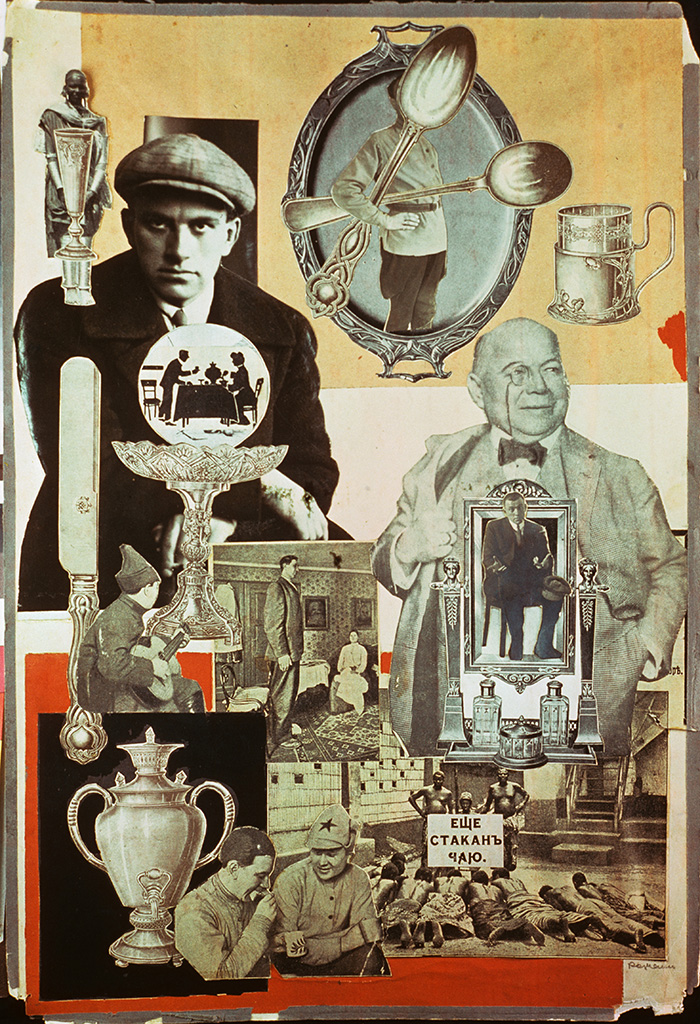
Fig. 1. — Brigade KGK (Viktor Koretsky [1909–98], Vera Gitsevich [1897–1976], and Boris Knoblok [1903–84]). “We had to overcome among the people in charge of trade the unhealthy habit of distributing goods mechanically; we had to put a stop to their indifference to the demand for a greater range of goods and to the requirements of the consumers.” From the 16th to the 17th Congress of the All-Union Communist Party (Bolsheviks), 1934, no. 57, gelatin silver print, 22.7 × 17 cm. Los Angeles, Getty Research Institute, 2014.R.25.
Fig. 2. — Brigade KGK (Viktor Koretsky [1909–98], Vera Gitsevich [1897–1976], and Boris Knoblok [1903–84]). “There is still among a section of Communists a supercilious, disdainful attitude toward trade in general, and toward Soviet trade in particular. These Communists, so-called, look upon Soviet trade as a matter of secondary importance, not worth bothering about.” From the 16th to the 17th Congress of the All-Union Communist Party (Bolsheviks), 1934, no. 56, gelatin silver print, 22.7 × 17 cm. Los Angeles, Getty Research Institute, 2014.R.25.
Collage of photographs showing Vladimir Mayakovsky surrounded by a silver samovar, cutlery, and trays; two soldiers enjoying tea; a giant man in a bourgeois parlor; and nine African men lying prostrate before three others who hold a sign that reads, in Cyrillic letters, “Another cup of tea.”
Fig. 3. — Aleksandr Rodchenko (Russian, 1890–1956). Draft illustration for Vladimir Mayakovsky’s poem “Pro eto,” accompanied by the lines “And the century stands / Unwhipped / the mare of byt won’t budge,” 1923, cut-and-pasted printed papers and gelatin silver photographs, 42.5 × 32.5 cm. Moscow, State Mayakovsky Museum. Art © 2024 Estate of Alexander Rodchenko / UPRAVIS, Moscow / ARS, NY. Photo: Art Resource.
Fig. 4. — Boris Klinch (Russian, 1892–1946). “Krovovaia sobaka,” Noske (“The bloody dog,” Noske), photomontage, 1932. From Proletarskoe foto, no. 11 (1932): 29. Los Angeles, Getty Research Institute, 85-S956.
Fig. 5. — Brigade KGK (Viktor Koretsky [1909–98], Vera Gitsevich [1897–1976], and Boris Knoblok [1903–84]). “We have smashed the enemies of the Party, the opportunists of all shades, the nationalist deviators of all kinds. But remnants of their ideology still live in the minds of individual members of the Party, and not infrequently they find expression.” From the 16th to the 17th Congress of the All-Union Communist Party (Bolsheviks), 1934, no. 62, gelatin silver print, 22.7 × 17 cm. Los Angeles, Getty Research Institute, 2014.R.25.
Fig. 6. — Brigade KGK (Viktor Koretsky [1909–98], Vera Gitsevich [1897–1976], and Boris Knoblok [1903–84]). “There are two other types of executive who retard our work, hinder our work, and hold up our advance. . . . People who have become bigwigs, who consider that Party decisions and Soviet laws are not written for them, but for fools. . . . And . . . honest windbags (laughter), people who are honest and loyal to Soviet power, but who are incapable of leadership, incapable of organizing anything.” From the 16th to the 17th Congress of the All-Union Communist Party (Bolsheviks), 1934, no. 70, gelatin silver print, 22.7 × 17 cm. Los Angeles, Getty Research Institute, 2014.R.25.
Fig. 7. — Artist unknown. “The Social Democrat Grzesinski,” from Proletarskoe foto, no. 3 (1932): 7. Los Angeles, Getty Research Institute, 85-S956.
Fig. 8A. — Pavel Petrov-Bytov (Russian, 1895–1960), director. Screen capture from the film Cain and Artem, 1929. Image courtesy University of California, Berkeley, Berkeley Art Museum and Pacific Film Archive Library.
Fig. 8B. — Pavel Petrov-Bytov (Russian, 1895–1960), director. Screen capture from the film Cain and Artem, 1929. Image courtesy University of California, Berkeley, Berkeley Art Museum and Pacific Film Archive Library.
Fig. 8C. — Pavel Petrov-Bytov (Russian, 1895–1960), director. Screen capture from the film Cain and Artem, 1929. Image courtesy University of California, Berkeley, Berkeley Art Museum and Pacific Film Archive Library.
Fig. 9. — Herbert George Ponting (English, 1870–1935). Camera Caricature, ca. 1927, gelatin silver prints mounted on card, 49.5 × 35.6 cm (grid). London, Victoria and Albert Museum, RPS.3336–2018. Image © Royal Photographic Society Collection / Victoria and Albert Museum, London.
Fig. 10. — Aleksandr Zhitomirsky (Russian, 1907–93). “There are lucky devils and unlucky ones,” cover of Front-Illustrierte, no. 10, April 1943. Prague, Ne Boltai! Collection. Art © Vladimir Zhitomirsky.
of